Carré Hermès silk

At the origin of silk there is a butterfly. The Bombyx of the mulberry tree (Bombyx mori) or rather, to be more precise, its cocoon. The one that the caterpillar (the silkworm) will weave to prepare for its metamorphosis.
In China, where silk appeared between 3000 and 2000 BC, the discovery of the silkworm is attributed to Empress Leizu. Legend has it that she was drinking tea under a mulberry tree when a cocoon fell into her cup. As she wanted to get rid of it, a silken thread came loose and the more she pulled, the longer the thread lengthened. Wrapping it around her finger, she felt a pleasant warmth and had the idea of weaving it. The Empress talked about it around her, and this discovery spread, giving birth to sericulture (silkworm breeding).
A butterfly is 300 eggs which give 300 silkworms, so 300 cocoons and 450 kilometers of yarn and 450 kilometers of yarn is a Carré Hermès.
A cocoon alone can provide 1.5 km of filaments which, once extracted, go to the spinning mill to be twisted there, grouped together in a sort of large bundle of long white threads on "reels" to form a "fleet ", then "milled" that is to say twisted together to give them more solidity then woven and finally "dégrouse", that is to say washed with Marseille soap to make the fabric shiny, supple and silky .
There are different types of silk differentiated by their weaving: chiffon, silk organza, silk satin, silk pongee, silk twill, etc.
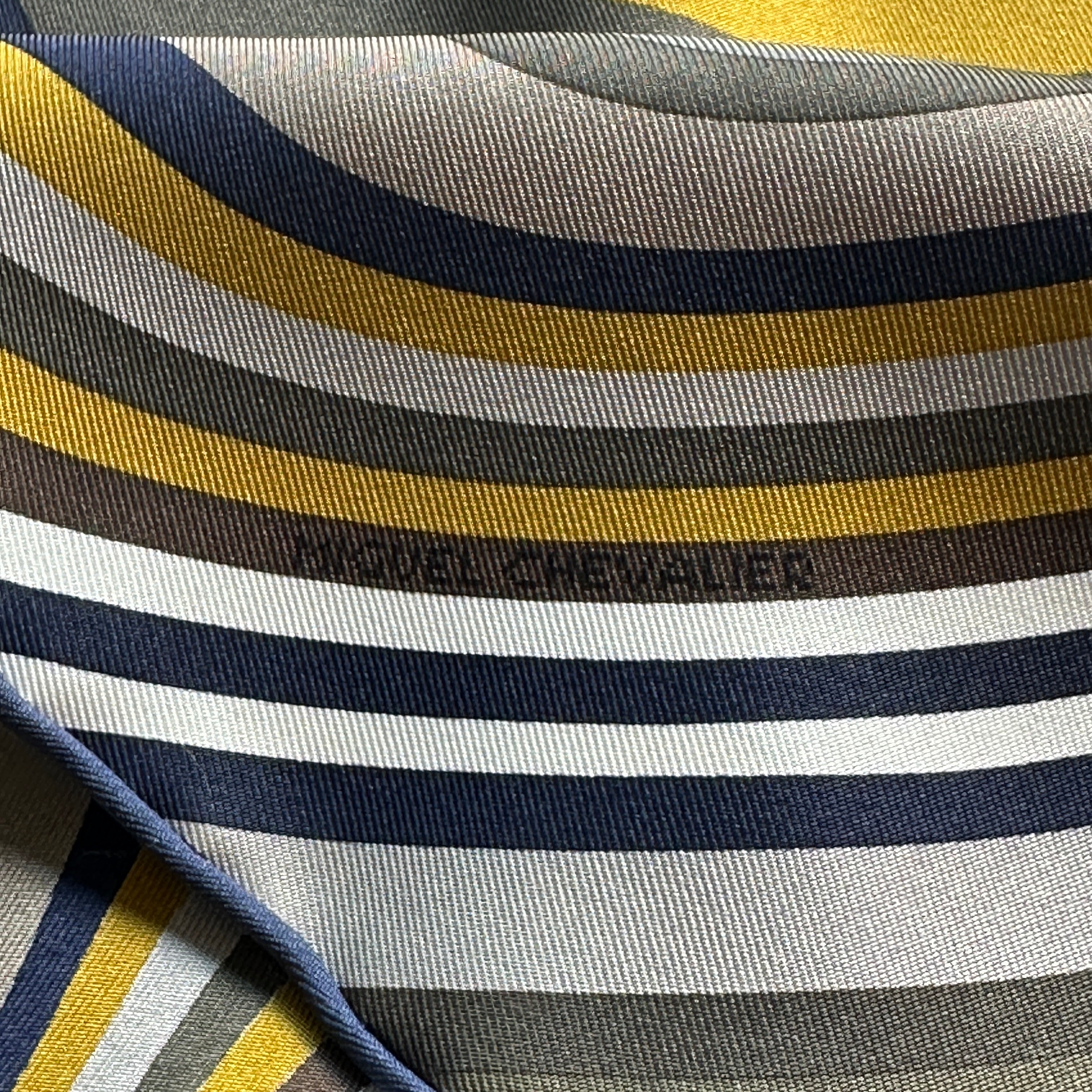
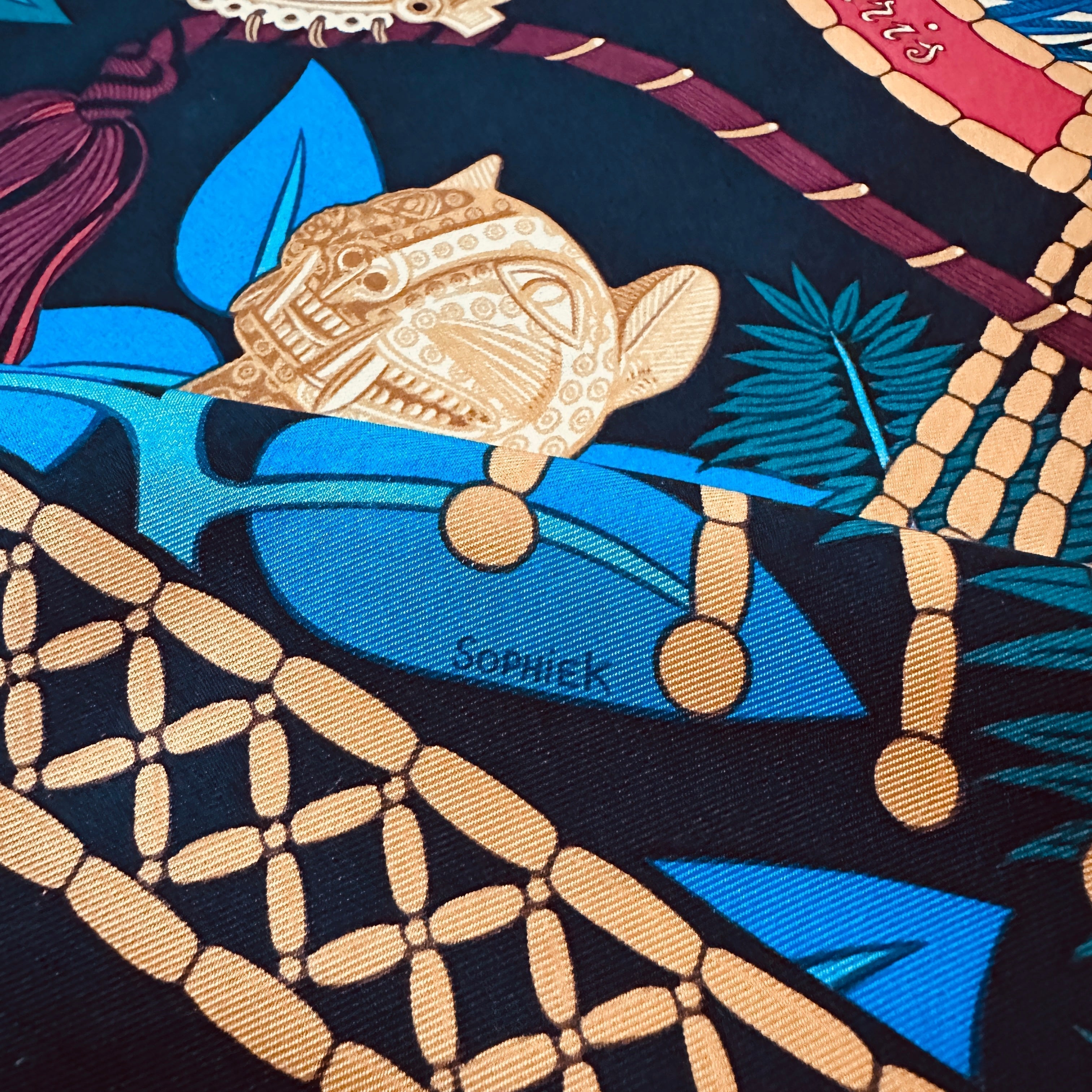
Silk twill is therefore not a material but a way of weaving yarn.
This technique, characteristic of the Carrés Hermès, makes it possible to obtain a more flexible but resistant silk which makes the fabrics almost wrinkle-free and highlights the magnificent colors of these Carrés that we love so much.
Sources:
%20or%20rather,%20to%20be%20more%20precise,%20its%20cocoon.%20The%20one%20that%20the%20caterpillar%20(the%20silkworm)%20will%20weave%20to%20p...)